
Deleted the App. Downloaded It Again?
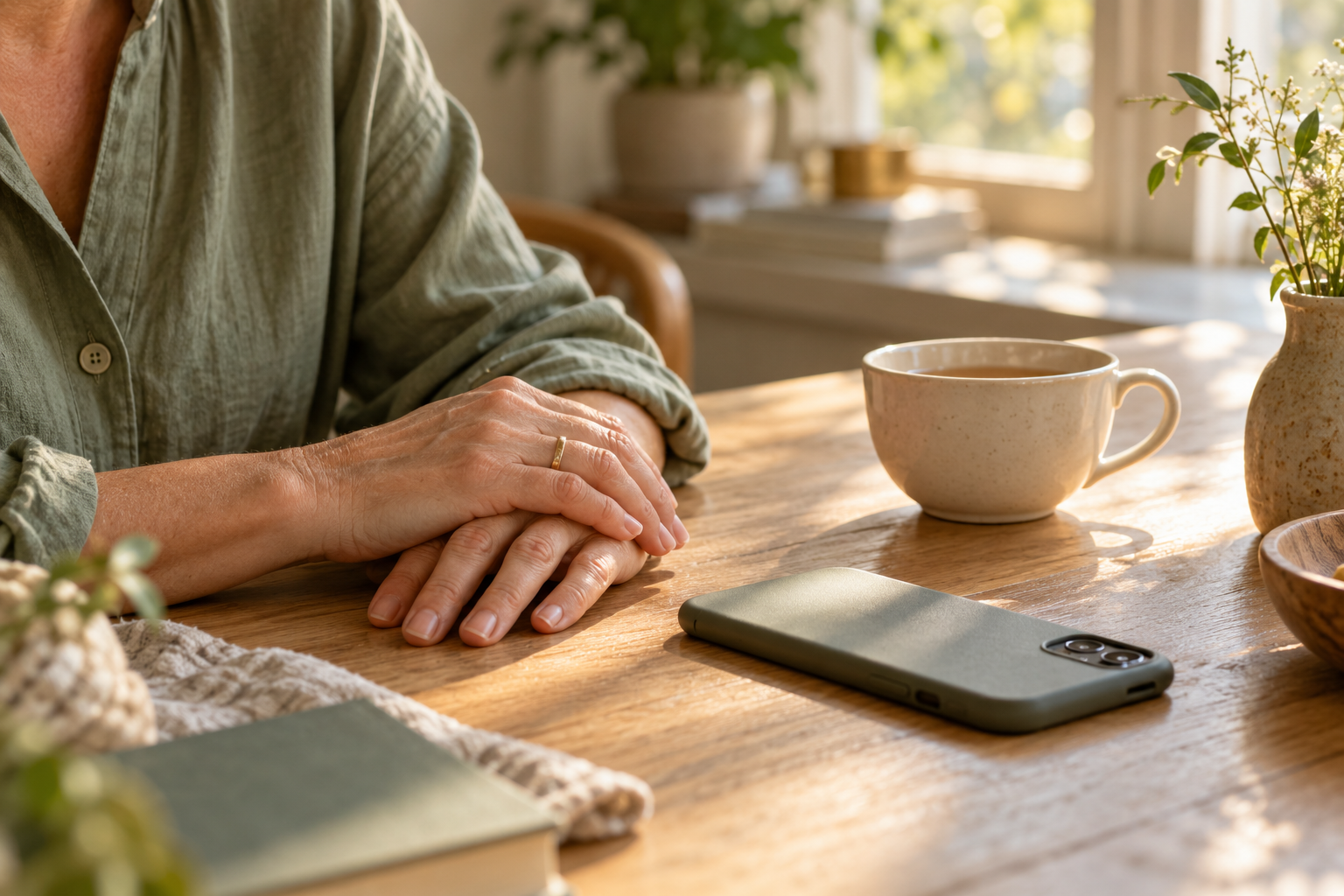
Why a healthier relationship with your phone needs more than restrictions.
You set a screen limit. Delete Instagram. Promise yourself that this time will be different.
For a while, it is.
Then a difficult day arrives. You feel overwhelmed, lonely or exhausted. You override the limit. Reinstall the app. Scroll.
Afterwards, you blame yourself.
“Why do I have so little willpower?”
You removed the app. But what happened to the reason you needed it?

An app can block the scrolling. But what happens to the feeling?
Screen limits and app blockers can create a useful pause. These tools have a place.
But if you reach for your phone whenever you feel overwhelmed, a time limit does not necessarily teach you how to meet that overwhelm.
A research review found a relationship between difficulties managing emotions and problematic smartphone use.
Perhaps you need rest, reassurance, connection or help beginning a difficult task.
Understanding that need gives you something to work with beyond watching the clock.

A fresh restriction. A familiar cycle.
A new blocker comes with a promise.
“Now I will focus.”
“Now I will stop wasting my evenings.”
When you do not trust yourself around your phone, a rule can feel reassuring.
But when you bypass the rule, reassurance can turn into self-criticism.
You decide that you failed. So you look for a stricter rule.
Another restriction. The same unmet need.
A boundary is useful when it supports you. It becomes exhausting when every slip feels like a verdict on your character.
Your screen time is information. It is not a measure of your worth.
Have you stopped scrolling—or found another escape?
Perhaps you put down your phone but start reaching for snacks whenever work feels difficult. Or shopping online. Or keeping yourself so busy that you never have to sit with your feelings.
The escape can change while the need for relief remains.
When emotional avoidance is driving your scrolling, reducing access alone may leave that pattern untouched.
Learning to meet the feeling gives you more ways to respond.
What if you could trust yourself around your phone?
Imagine using your phone for something useful or enjoyable, then putting it down.
Noticing a notification without feeling pulled towards it. Feeling an urge to scroll without automatically following it.
Being able to return to your work, your family or your own quiet company.
That is the freedom we are working towards: feeling able to choose.
You may still keep notifications off or leave your phone outside the bedroom. Those boundaries can help you practise.
Alongside them, you develop confidence in yourself—your ability to notice discomfort, understand what you need and respond with care.
Meet the feeling. Then make the choice.
The next time you reach for your phone, pause:
What am I feeling?
What am I hoping scrolling will give me?
What would actually help?
Rather than “I am overwhelmed,” try noticing:
“Some feelings of overwhelm are passing through my mind.”
You can acknowledge the feeling without letting it decide your next action.
Perhaps you need a proper break. A conversation. Or one manageable step into the task you are avoiding.
Your phone does not have to be your only route to relief.
You are not your doomscrolling habit. You can learn new ways to meet difficult moments—with awareness, kindness and practice.
This is central to my work at A Full Life: helping you understand what drives your scrolling and develop the skills to feel more empowered in yourself.
Use the blocker if it helps. Let it create space for the deeper work.
The goal is to feel more at ease with your phone—and more present for your life.
